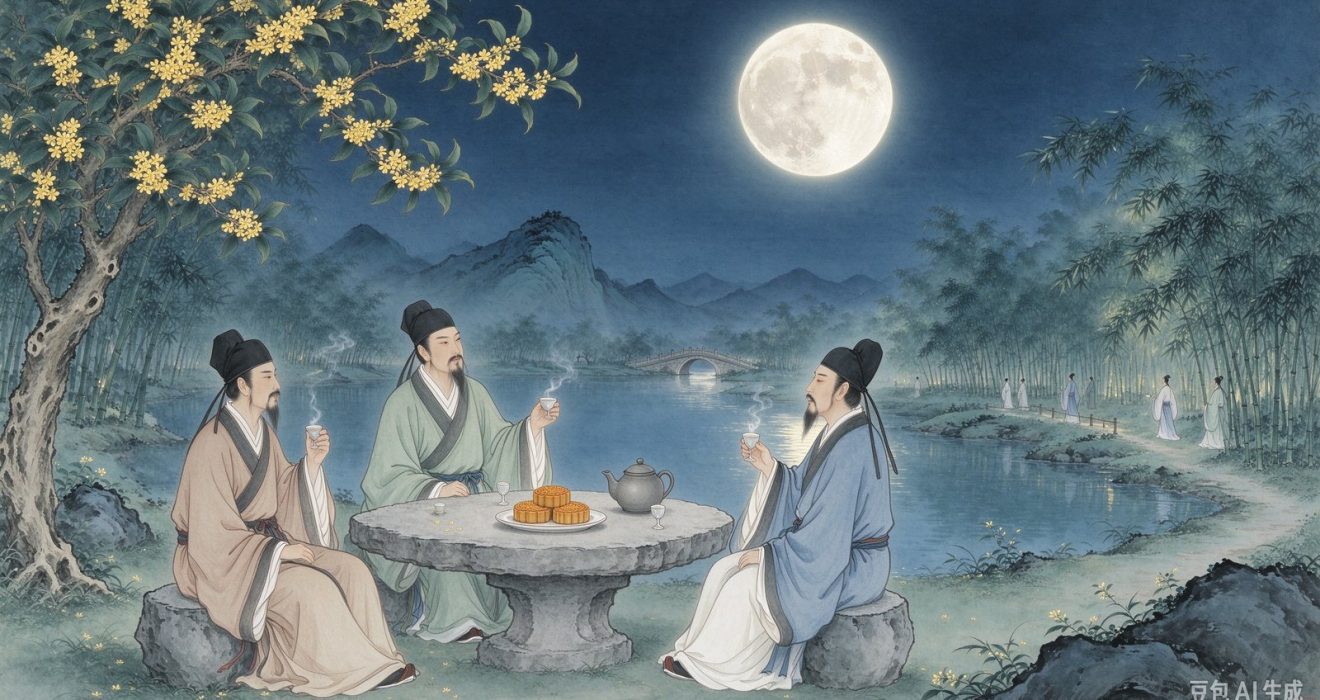
Same Moon, a Thousand Miles Apart: Su Dongpo’s Mid-Autumn Wish
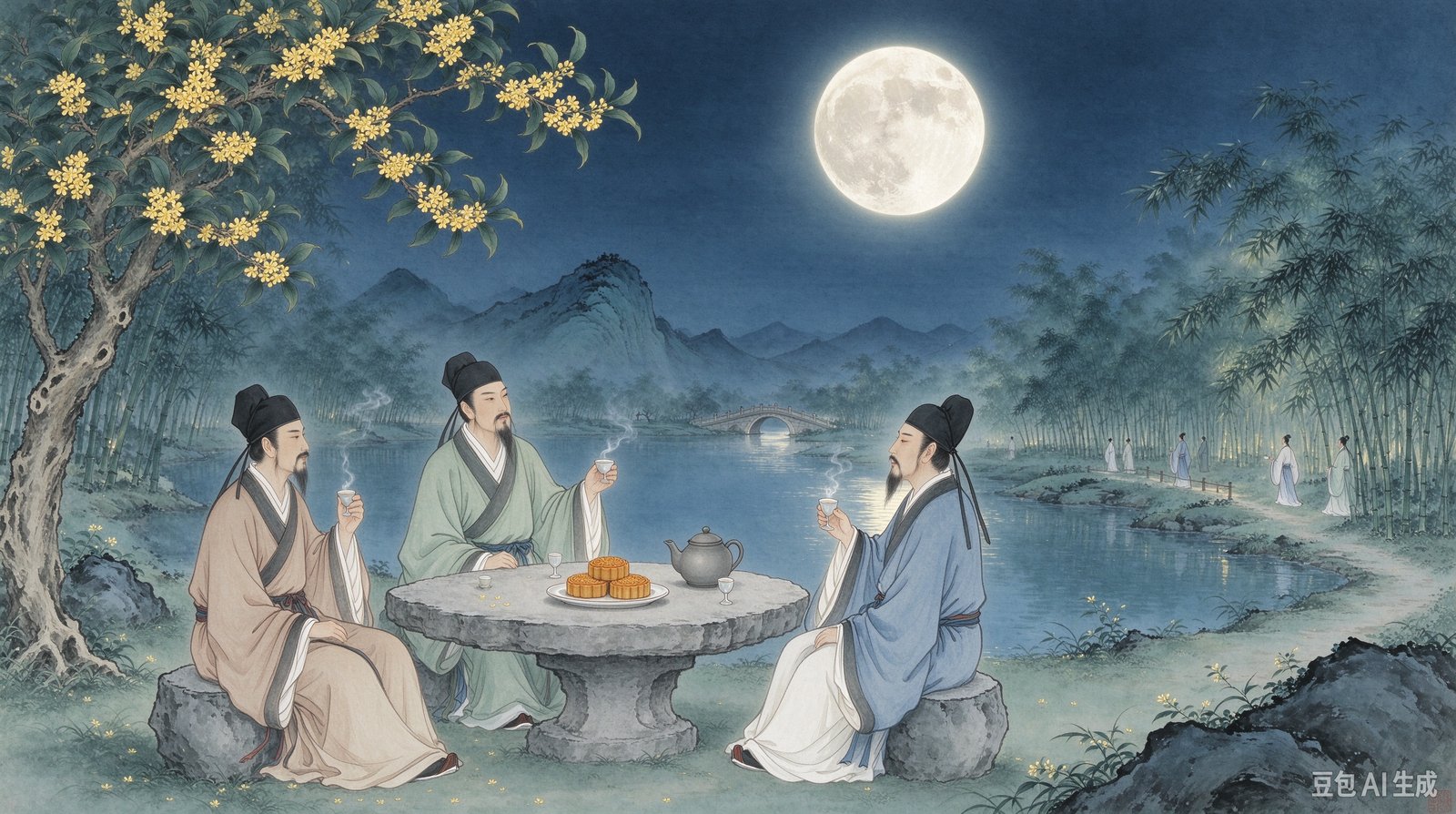
Every autumn, when the full moon rises over China, one old poem is quoted more than any other. Not a line from the great Tang masters, but a single couplet from a Song Dynasty official who had spent the night drinking, missing his brother:
但愿人长久,千里共婵娟。
— Su Shi (Su Dongpo), Prelude to Water Melody (水调歌头), 1076 AD
Roughly translated: “May the ones we love live long, though a thousand miles apart, we still share this beautiful moon.” The word 婵娟 (chán juān) literally means “graceful, lovely” — here it stands for the moon itself.
The night the poem was written
In the Mid-Autumn of 1076, Su Shi (苏东坡, 1037–1101) was the prefect of Mizhou, in today’s Shandong. He had asked — and been granted — a transfer closer to his younger brother Su Zhe, with whom he had not spoken in seven years. The request was denied. On festival night he drank until midnight, wrote the song lyric down, and recorded in its preface that the poem was about missing a relative (兼怀子由, “and at the same time remembering Ziyou”, his brother’s courtesy name).
The first half of the lyric is a drunken conversation with the sky. He asks where the moon came from, says he would like to ride the wind home to heaven, then thinks better of it: “I’d live in cold crystal palaces up there” — 高处不胜寒 (“the high places are too cold to bear”), a line politicians still quote about the loneliness of power.
The turn that made it immortal
The second half is what people remember. The moon moves around, shining on windows and sleeping people, and Su Shi does something unexpected: instead of complaining, he reasons with it.
人有悲欢离合,月有阴晴圆缺,此事古难全。
“Men have sorrow and joy, parting and meeting; the moon dims and brightens, waxes and wanes. Nothing has ever been perfect since the beginning of time.”
Imperfection, he decides, is not a bug in the universe — it is its design. And from that acceptance grows the final wish, the couplet that now prints itself on hundreds of millions of mooncake boxes every year: may the people we love be well and long-lived; even a thousand miles apart, we look up at the same moon, and that is enough.
Why it still works, a thousand years later
Part of it is that Su Shi wrote the definitive answer to a very modern situation: separation. Families scattered across cities, friends on different continents, relatives you only meet at holidays — the Mid-Autumn moon has always been for people who cannot be in the same room. Su Shi’s gesture is to make distance bearable without denying it. He never promises the moon is a substitute for the person. He promises only that the longing is shared, and that sharing it, under the same light, is its own kind of togetherness.
There is also the human story. Su Shi spent much of his career in political exile; he wrote this lyric at thirty-nine, already famous, already stuck in a provincial posting he did not want, estranged from the brother he loved most. Yet there is no bitterness in the ending — only a cup raised toward the sky and a wish extended outward. That equanimity in hard times is why nine centuries of Chinese readers have treated Su Dongpo less like a writer and more like a wise, cheerful friend.
So tonight, wherever you are, and whoever you are missing: same moon. 但愿人长久,千里共婵娟.
Happy Mid-Autumn Festival.